Microsoft news for partners
Microsoft 365 leadership change: what partners should watch
Ryan Roslansky is leaving Microsoft and Microsoft 365 leaders now report elsewhere. What leadership changes usually mean for Microsoft partners.
By UBE Marketing Team · · 2 min read

Senior leadership changes at Microsoft rarely change much for partners overnight. Over time, though, they can shift priorities, budgets and the people you rely on inside Microsoft. This week's Microsoft 365 and LinkedIn announcement is worth a calm look for that reason.
What Microsoft announced
Microsoft has shared notes from Satya Nadella and Ryan Roslansky confirming:
- Ryan Roslansky, Executive Vice President of LinkedIn and Microsoft 365, is leaving Microsoft after nearly 18 years at LinkedIn and Microsoft. He will stay on as an advisor to Nadella until the end of the calendar year to support the transition.
- Sumit Chauhan and Lan Ye will report to Charles Lamanna, and Jon Friedman will report to Jacob Andreou.
- Dan Shapero continues as LinkedIn CEO and Mohak Shroff continues in his role, both reporting to Nadella.
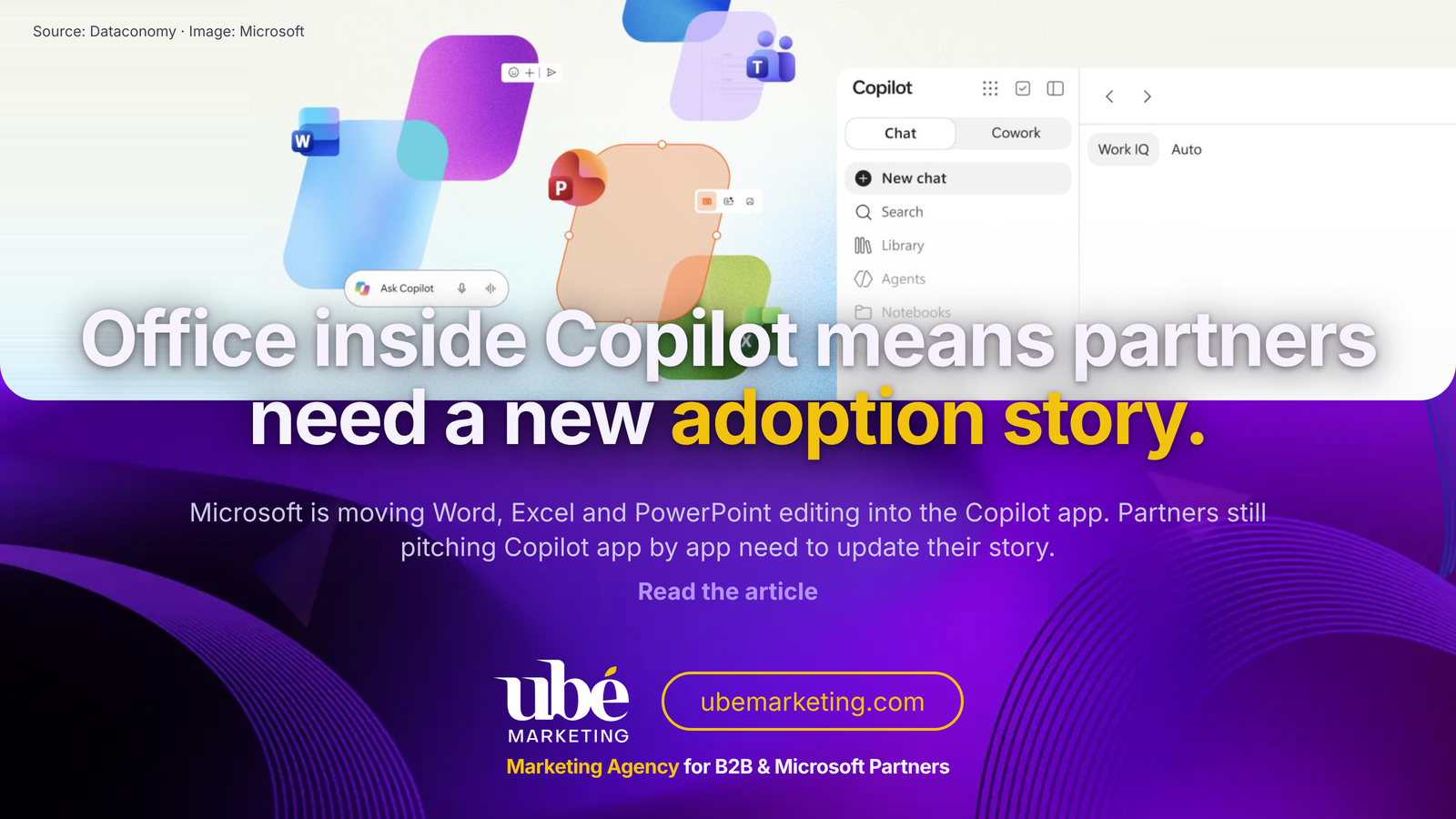
- Nadella restated Microsoft's aim of building a new operating system for work, with Office and Copilot fully embedded in each other.
Why it matters for Microsoft partners
For Microsoft 365 and Copilot partners, the message on strategy is continuity. Nadella's note doubles down on Copilot and Office as one experience, which is the direction partners have been building towards all year. There is no signal in the announcement of a change in product direction, and partners should not invent one.
What leadership changes do tend to affect is execution. New reporting lines can bring fresh priorities, different ways of measuring success and, sometimes, adjustments to how programs, incentives and partner engagement are run. Those changes usually appear gradually, often around major events or the start of a new planning cycle.
There is also a people dimension. When senior structures move, the teams beneath them sometimes shift too. Partners who rely on a single champion inside Microsoft are more exposed than those with relationships across product, partner and field teams.
For B2B marketers, LinkedIn continuing as a standalone priority under its existing CEO is a useful note of stability. Nadella's message cites 1.3 billion LinkedIn members, and it remains a core channel for most partners' demand generation.
What partners should do next
- Keep executing. Your Copilot and Microsoft 365 plans are still aligned with Microsoft's stated direction. Don't pause campaigns waiting for clarity that may take months.
- Broaden your Microsoft relationships. Map who you know across partner development, product and field sales, and fill the gaps. This strengthens your co-sell position whatever happens.
- Watch the signals. Pay close attention to roadmap updates, program guides and incentive changes over the coming months, and be ready to adjust messaging quickly.
- Keep investing in LinkedIn. It remains a reliable channel for reaching Microsoft customers and Microsoft sellers alike.
How UBE can help
UBE helps Microsoft partners stay aligned with Microsoft's priorities and keep their go-to-market moving through change. Learn more about our Microsoft partner marketing services or contact us for a quick planning session.
Source: Official Microsoft Blog
Read the full story: Microsoft 365 and LinkedIn leadership update →Frequently asked questions
Does this change Microsoft's Copilot strategy?
Nothing in the announcement suggests a change of direction. Satya Nadella's note restates the aim of building a new operating system for work, with Office embedded in Copilot and vice versa.
Should partners change their plans because of this?
Not immediately. The sensible approach is to keep executing, stay close to your Microsoft contacts and watch for any changes in priorities, programs or incentives as the new reporting lines settle in.